Comparing Samsung’s AI Technology with Competitors

The artificial intelligence race isn’t just about who can throw the biggest model or claim “AI inside.” It’s about how seamlessly the AI integrates into devices, how much it respects our privacy, and how useful it is in our day to day activities. Samsung’s AI technology versus competing AI ecosystems in 2025 is a critical battleground. In this article, we’ll dig into how Samsung stacks up against rivals like Google, Apple, and others, what’s working, what’s lagging, and what to expect next.
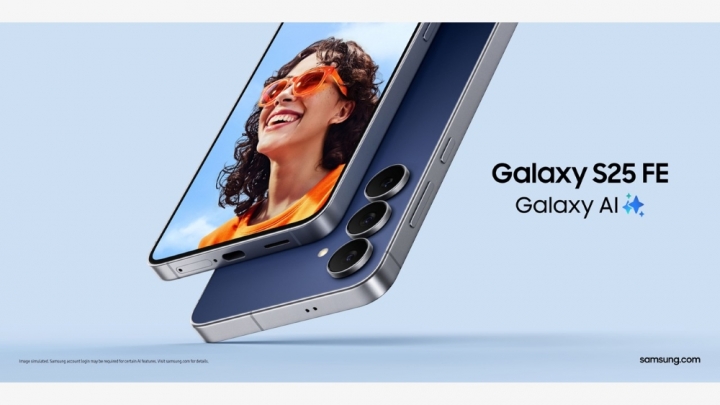
The Core of Samsung’s AI: Galaxy AI and Underlying Engines
Samsung’s AI push is centralized around Galaxy AI, a suite of intelligent features built into its software environment.
Main elements include:
Live Translate / Call Assist: lets you translate live during phone calls, or turn speech into text and replies inside calls.
Sketch-to-Image / Drawing Assist: you can sketch in apps like Notes or Gallery and let AI help finish or augment your drawing.
ProVisual Engine: a pipeline for AI-powered image processing (noise control, dynamic range tweaking, scene optimization) in Samsung’s cameras.
Now Brief / Now Bar: these are UI/UX elements that shows us AI driven summaries, suggestions or schedules in an ambient way.
The architecture is “hybrid” in nature: some tasks run on-device, others leverage cloud or server models (e.g. generative models or heavy image processing).
So when you say “Samsung’s AI technology versus competing AI ecosystems in 2025”, you need to see how this hybrid approach matches up with what others are doing.
What Competing AI Ecosystems Bring to the Table
Let’s see how major rivals compare, to give context for your comparing-Samsung’s-AI prompt.
Google / Pixel AI
Google’s AI ecosystem leans heavier on cloud and powerful backends, plus on-device models.
Features like Call Screening, Hold for Me, and Direct My Call are AI features unique to Pixel devices.
Compared to Samsung’s Live Translate, Google’s approach often emphasizes smart assistants and contextual awareness.
Pixel’s AI features are sometimes region-limited, which is a weakness versus Samsung’s broader deployment.
Apple / Apple Intelligence
Apple’s system is more privacy-centric: many AI tasks run fully on-device to avoid exposing user data.
Apple’s integration is very tight across its ecosystem (iPhone, iPad, Mac), the AI features tend to “just work” without the user thinking about backend.
However, because Apple is conservative about cloud processing and data sharing, some AI capabilities may lag in sheer scale or complexity and some are not as good as we expect it to be.
Other Players (Xiaomi, OnePlus, Huawei, etc.)
Many brands are building their own “HyperAI,” “HyperOS” or “Magic AI” ecosystems to compete.
Their strengths often lie in aggressive AI feature rollout, fast integration into devices, or localized features (e.g. Chinese brands optimizing for local languages).
But many of those AI ecosystems may not match Samsung’s device breadth or institutional strength in components (memory, displays, chips) behind the scenes.
Strengths of Samsung’s AI (from the Perspective of Comparing It)
When you’re comparing Samsung’s AI technology versus competing AI ecosystems in 2025, these are advantages Samsung holds:
- Ecosystem Reach & Device Breadth
Samsung isn’t just one phone, AI features in Galaxy phones, tablets, watches, home appliances — giving a broader canvas to use its AI across form factors. - Component Synergy
Samsung designs or controls key parts of the supply chain (memory, displays, chips). That vertical integration gives it advantages in latency, cost, and optimization when deploying AI features. - Balanced On-Device + Cloud Strategy
Instead of being all in cloud or all on device, Samsung’s hybrid mix lets it scale heavier features while retaining responsiveness and privacy for lighter tasks. This is a key point in your comparing scenario. - Advanced Imaging with ProVisual Engine
AI-powered image pipelines give Samsung a leg up in photography and videography, making real-world difference in consumer usage.
Weaknesses & Challenges
Even when doing Samsung’s AI technology versus competing AI ecosystems in 2025, there are still some areas Samsung needs to improve on:
Latency & Compute Limits in Devices
Some heavy AI tasks still require cloud offload. Devices can’t always handle massive models natively, which gives rivals with stronger cloud backends an edge.
Yield & Hardware Constraints in Semiconductor Space
Samsung’s chip division has struggled with yield and advanced nodes compared to leaders like TSMC. This affects how aggressive they can push AI hardware.
AI Feature Parity & Regional Limitations
Some AI features in Samsung’s ecosystem may not be available worldwide, weakening the comparison when competitors show global consistency.
Perception & Marketing
Samsung’s AI branding is still less iconic than Apple’s or Google’s in many markets, so influencing public awareness is harder.
Real World Use Cases: Where the Differences Show
When comparing Samsung’s AI technology versus competing AI ecosystems in 2025, the gap is clearest when you look at real usage:
Live Conversations in Foreign Languages: Samsung’s Live Translate is a powerful tool: in a call, it can translate in real time. Rivals often lean on separate translator apps or fragmented features.
Photography & Video Production: The ProVisual Engine brings advantages in low-light, HDR, noise reduction, features that everyday users will see in their camera output.
Sketch / Drawing Assist: Samsung’s sketch prompts and AI completion is something few competitors match at this depth, especially inside integrated apps.
Ambient Summaries & UI Intelligence: Now Brief, Now Bar, dynamic summarization help Samsung build an intelligent “background AI” experience.
Cross-device Integration: Because Samsung spans many hardware categories, the AI features have more places to connect (e.g. your watch, TV, home devices), things you won’t always see in more siloed ecosystems.
Looking Ahead: What to Expect Next
Because you’re writing about Samsung’s AI technology versus competing AI ecosystems in 2025, the next steps are important:
More LLM Integrations: Samsung is exploring integrations with models like ChatGPT / OpenAI to strengthen generative AI capabilities.
Stronger On-Device Models: As chip technology improves, more AI will shift to running locally, improving speed and reducing cloud dependency.
Deeper Ecosystem Interplay: Expect tighter AI coordination between devices (phones, TVs, wearables, appliances).
Better Regional Availability: Samsung will need to push feature parity globally so that its AI ecosystem doesn’t feel fragmented in some markets.
Conclusion
When you frame this as Samsung’s AI technology versus competing AI ecosystems in 2025, it becomes clear that Samsung is playing a strong strategic game. Their strengths lie in component synergy, hybrid AI deployment, and broad device reach. Their challenges come in hardware constraints, regional AI deployment, and perception.
When you purchase through links on our site, we may earn an affiliate commission which helps in keeping this website running. Here’s how it works.
Use the Code ref-09ngex to get 5% off from Samsung

About the Author: Ikhide Uanseoje
Welcome to SamUniverse! My name is Ikhide Uanseoje, the mind behind this website dedicated to everything Samsung. As a passionate tech enthusiast and lover, I specialize in delivering the latest news, in-depth reviews, and helpful guides about Samsung products, from smartphones and wearables to laptops and accessories.
Born and raised in Nigeria, I’ve always had a fascination with cutting-edge technology and how it shapes our lives. This passion led me to create SamUniverse, a platform where Samsung fans and tech lovers can explore innovations, tips, and updates that truly matter.
When I’m not writing, you’ll find me exploring new tech trends, brainstorming ideas for future posts, or working on ways to make this website your go-to resource for all things Samsung.
Stay tuned to SamUniverse as we uncover the best Samsung has to offer!